Korean Bibimbap
Highlighted under: Inspired World Food Inspiration
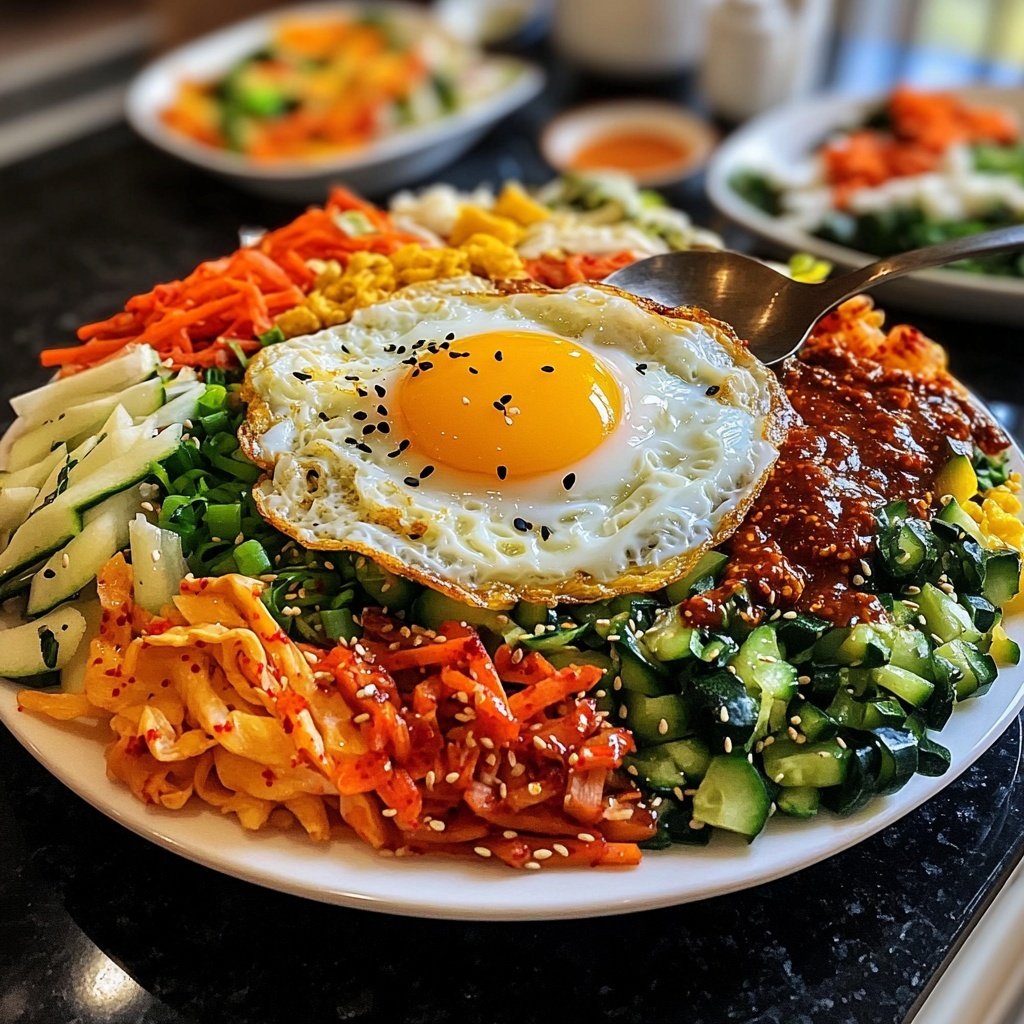
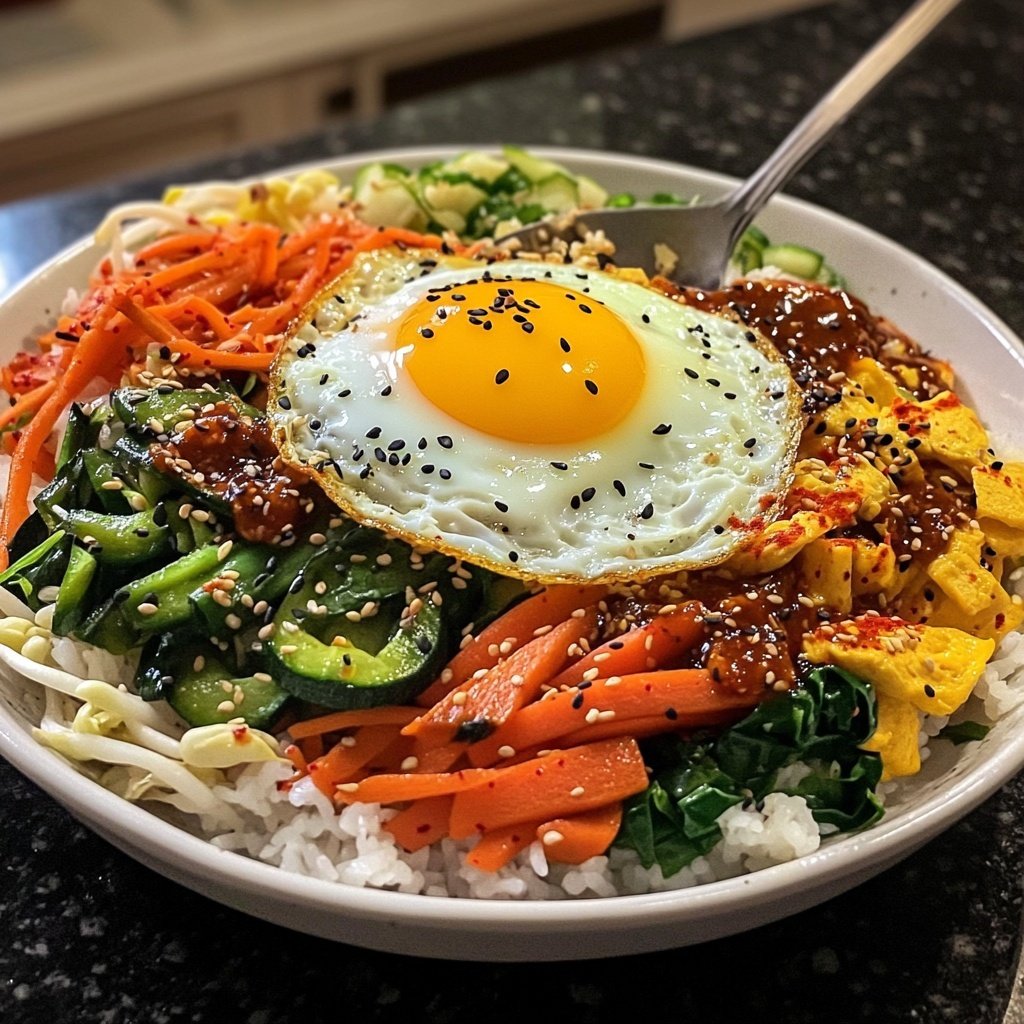
Korean Bibimbap is a vibrant and flavorful dish that combines rice, vegetables, and protein topped with a sunny-side-up egg and gochujang sauce.
Korean Bibimbap is a traditional Korean dish that brings together a colorful array of vegetables, rice, and protein, all mixed together with a spicy gochujang sauce. This dish is not only delicious but also visually appealing, making it a favorite among many.
Why You'll Love This Recipe
- A perfect balance of flavors and textures
- Customizable with your choice of vegetables and protein
- Healthy and satisfying meal in one bowl
The Essence of Bibimbap
Bibimbap, which translates to 'mixed rice,' is a beloved Korean dish that embodies harmony and balance. Each component contributes not just flavor but also nutrition, making it a wholesome meal. The vibrant colors of the vegetables signify freshness and health, inviting you to dive into a bowl that’s as appealing to the eyes as it is to the palate.
Traditionally, bibimbap is served in a hot stone bowl, allowing the rice to crisp up at the bottom, adding a delightful texture to each bite. However, this recipe is just as satisfying when made in a regular bowl, ensuring that everyone can enjoy this classic dish at home without special equipment.
Customizing Your Bibimbap
One of the best aspects of bibimbap is its versatility. You can easily customize it to fit your dietary preferences or whatever ingredients you have on hand. For a vegetarian option, simply skip the eggs or substitute them with tofu. For meat lovers, adding bulgogi or grilled chicken can elevate the dish further.
Feel free to experiment with various vegetables too! Common additions include radishes, broccoli, or even kimchi for an extra kick. The key is to ensure that you have a good mix of textures and flavors, from crunchy to tender, mild to spicy, ensuring that each bite is an adventure.
Serving Suggestions and Pairings
When serving bibimbap, consider pairing it with traditional Korean sides, known as banchan, such as kimchi or pickled vegetables. These small dishes complement the main meal and enhance the overall dining experience. A refreshing cucumber salad can also be a great addition to balance the richness of the bibimbap.
To drink, a chilled glass of Korean barley tea or a light beer can be perfect accompaniments. If you're looking for a non-alcoholic option, try sparkling water infused with lemon or lime for a refreshing touch.
Ingredients
For the Bibimbap
- 2 cups cooked white rice
- 1 cup spinach, blanched
- 1 cup bean sprouts, blanched
- 1 carrot, julienned
- 1 zucchini, julienned
- 4 shiitake mushrooms, sliced
- 4 eggs
- 2 tablespoons sesame oil
- Salt, to taste
- Gochujang (Korean chili paste), to taste
- Sesame seeds, for garnish
These ingredients come together to create a delicious and healthy meal.
Instructions
Prepare the Vegetables
Heat sesame oil in a pan over medium heat. Sauté the carrots, zucchini, and mushrooms separately until tender. Season each with a pinch of salt. Set aside.
Cook the Eggs
In the same pan, fry the eggs sunny-side-up. Cook until the whites are set but the yolks are still runny.
Assemble the Bibimbap
In a bowl, layer the cooked rice, spinach, bean sprouts, sautéed vegetables, and top with a fried egg. Drizzle with gochujang and sprinkle with sesame seeds.
Mix and Serve
Before eating, mix all the ingredients together thoroughly. Enjoy your delicious Korean Bibimbap!
Serve with additional gochujang on the side for those who like it spicier.
Pro Tips
- Feel free to customize your bibimbap with your favorite vegetables or proteins like tofu or chicken.
Tips for Perfecting Your Bibimbap
To ensure your bibimbap is a hit, pay attention to the cooking of your vegetables. Sauté them just until tender to retain their vibrant colors and nutrients. Overcooking can lead to a mushy texture, which detracts from the overall experience. Each vegetable should shine in its own right.
Additionally, the quality of your gochujang matters. Opt for a good-quality Korean chili paste that balances heat and sweetness. This ingredient is crucial as it ties all flavors together, so don’t be shy with the drizzle! Adjust the quantity to your spice preference.
Storing and Reheating Leftovers
If you find yourself with leftover bibimbap, it stores well in the refrigerator for up to three days. To maintain the freshness, store the components separately if possible, especially the fried egg, which is best enjoyed freshly cooked. Reheat the rice and vegetables in a pan with a splash of water to steam them gently.
When reheating, you might want to fry a new egg to serve on top, bringing back that delightful runny yolk. This not only enhances the dish but also revives the original flavors, making it just as enjoyable the second time around.
Questions About Recipes
→ Can I make bibimbap vegetarian?
Absolutely! Just omit the egg or use a plant-based alternative.
→ What can I use instead of gochujang?
You can use sriracha or another chili paste, but the flavor will differ.
→ Can I prepare the ingredients in advance?
Yes, you can pre-cook the vegetables and store them in the refrigerator for a few days.
→ Is bibimbap healthy?
Yes, bibimbap is packed with vegetables and can be a nutritious meal option.
Korean Bibimbap
Created by: Honoria Blake
Recipe Type: Inspired World Food Inspiration
Skill Level: Intermediate
Final Quantity: 4 servings
What You'll Need
For the Bibimbap
- 2 cups cooked white rice
- 1 cup spinach, blanched
- 1 cup bean sprouts, blanched
- 1 carrot, julienned
- 1 zucchini, julienned
- 4 shiitake mushrooms, sliced
- 4 eggs
- 2 tablespoons sesame oil
- Salt, to taste
- Gochujang (Korean chili paste), to taste
- Sesame seeds, for garnish
How-To Steps
Heat sesame oil in a pan over medium heat. Sauté the carrots, zucchini, and mushrooms separately until tender. Season each with a pinch of salt. Set aside.
In the same pan, fry the eggs sunny-side-up. Cook until the whites are set but the yolks are still runny.
In a bowl, layer the cooked rice, spinach, bean sprouts, sautéed vegetables, and top with a fried egg. Drizzle with gochujang and sprinkle with sesame seeds.
Before eating, mix all the ingredients together thoroughly. Enjoy your delicious Korean Bibimbap!
Extra Tips
- Feel free to customize your bibimbap with your favorite vegetables or proteins like tofu or chicken.
Nutritional Breakdown (Per Serving)
- Calories: 600 kcal
- Total Fat: 25g
- Saturated Fat: 6g
- Cholesterol: 186mg
- Sodium: 450mg
- Total Carbohydrates: 85g
- Dietary Fiber: 5g
- Sugars: 4g
- Protein: 18g